

written by VJ
Guide to Picking the Perfect Pear-Shaped Engagement Ring
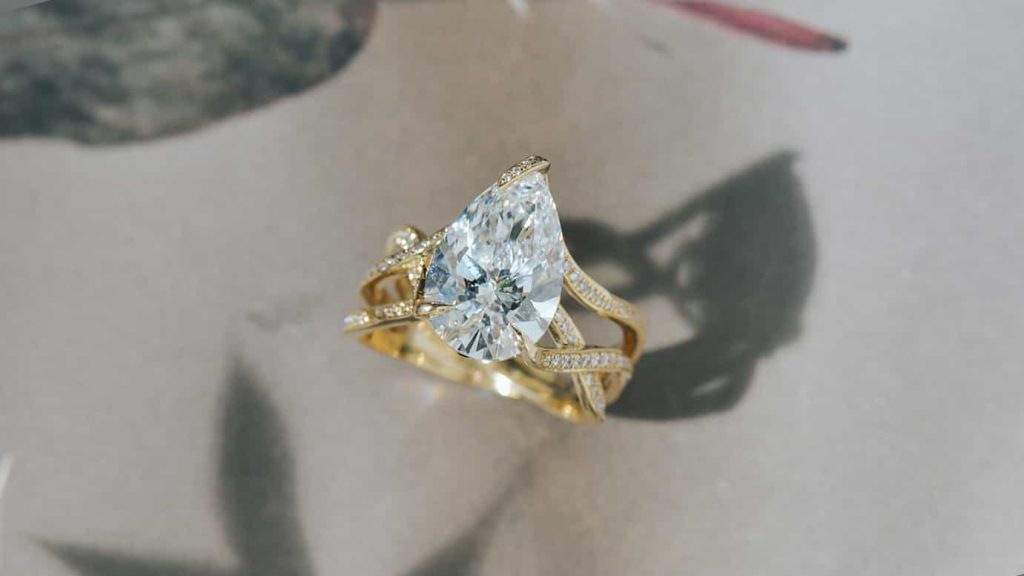
Pear shaped diamond rings feel elegant, romantic, and less expected than a round or oval.
But small details matter. Two stones can share the same carat weight and look completely different on the hand.
At Engage Studio, we still love pears. We just like choosing them carefully. The best engagement pear shaped rings come from understanding proportion, orientation, setting protection, and daily wear.
Key Takeaways
- Pear shaped diamonds elongate the finger, but proportions matter. Many balanced pears sit around a 1.50:1 to 1.80:1 ratio.
- The pointed tip needs protection through V-prongs, bezels, or smart prong placement.
- Halo, solitaire, and cathedral settings all work, but each changes the height and feel.
- Pears can show bow-tie, colour, fingerprints, and hand oils.
What is a pear shaped diamond?
A pear cut diamond is a teardrop-shaped diamond with one rounded end and one pointed tip. It blends the softness of an oval with the sharper line of a marquise.
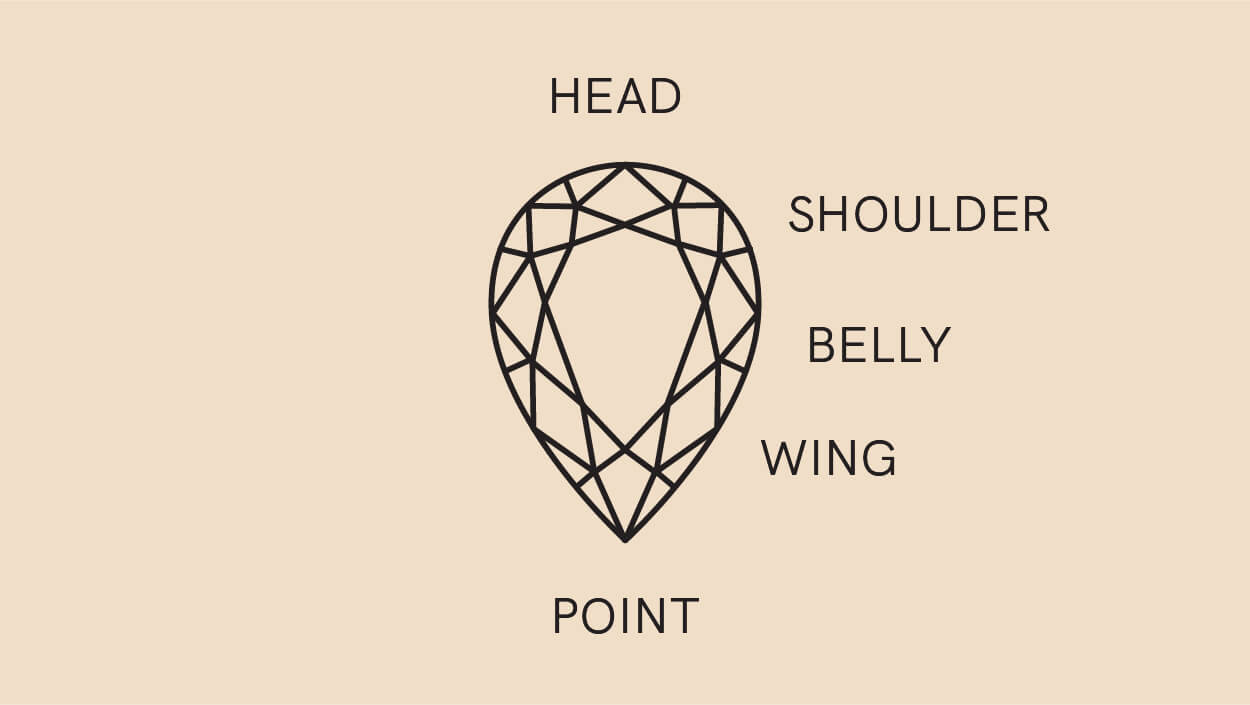
The main parts are the head, shoulder, belly, wing, and point. The shoulders should not sit too high, the wings should curve gently, and the point should line up.
Some people like a fuller pear shape stone ring. Others prefer a slimmer shape. Pear also has a quiet Grace Kelly-style elegance.
Pear proportions explained
Length-to-width ratio is one of the first things we check.
A fuller pear often sits around 1.45:1 to 1.50:1. A balanced pear usually lands around 1.55:1 to 1.70:1. A longer pear may sit closer to 1.75:1 to 1.80:1.
Still, the number is only a starting point. Fancy diamond shapes come down to the art of the cut, and pears are not cut in one standardized way.
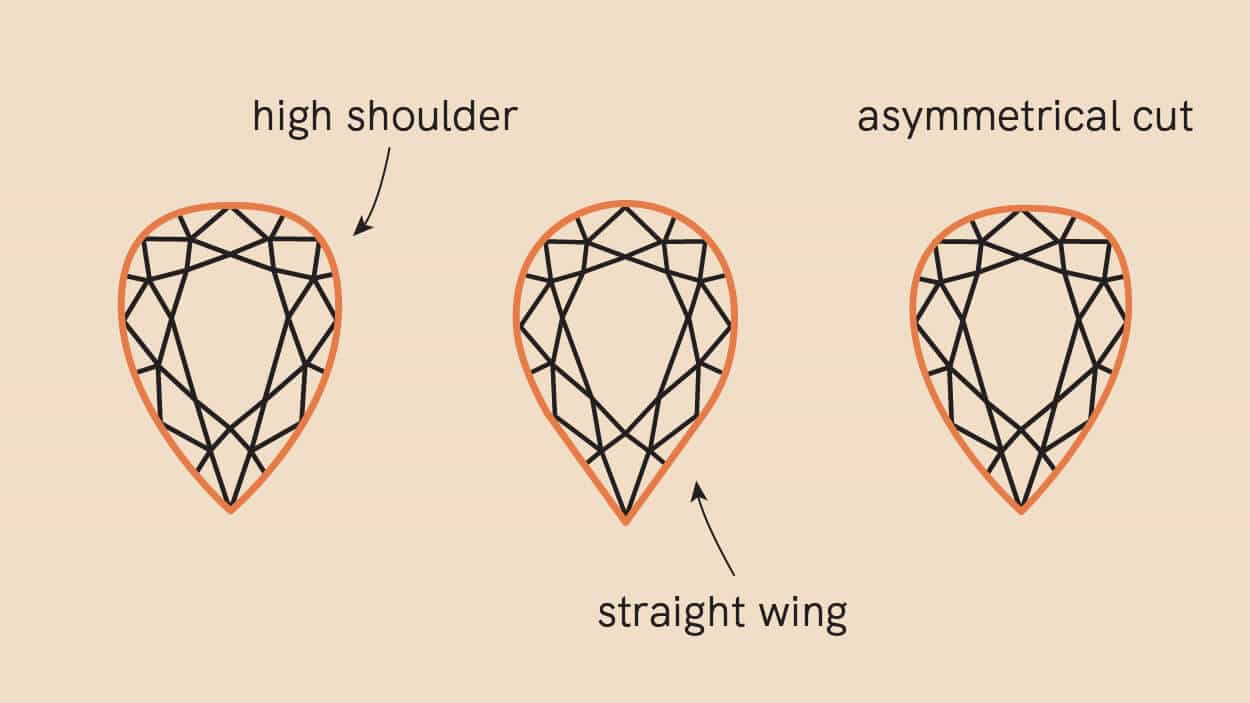
This is where high shoulders, straight wings, and asymmetry matter. A high shoulder can look triangular, almost like an arrowhead. A straight wing can lose the soft, plump curve. Some pears also sit unevenly, with one shoulder higher than the other.
So yes, ratio helps. But you still need to look at the actual stone.
Cut, colour, and bow-tie
Pear cuts are fancy shapes, so a certificate helps, but not completely.
Bow-tie looks like a darker area across the middle of the stone. A little is normal. Avoid a dark bow-tie that stays flat in every type of light.
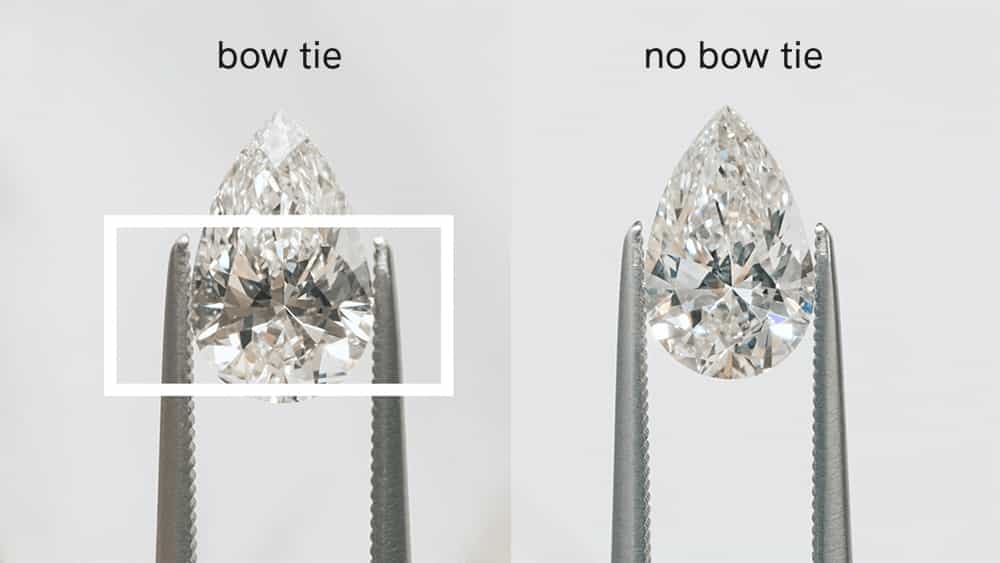
Pear diamonds can also show colour near the rounded body and tip. This matters more with pear engagement rings white gold, since warmth can be easier to see. For more, read the 4Cs of diamonds explained.
Vertical vs. east-west orientation on pear rings
Most pear shaped engagement rings are worn vertically. Point-up feels classic and lengthening. Point-down can feel softer from the wearer’s view.
A pear east west ring turns the stone sideways across the finger. It feels more modern and less expected, with less of a lengthening effect.
Not sure where to start?
Every custom ring at Engage Studio starts with a conversation, not a catalogue. Come talk it through with our team.
Contact UsOn-hand styling for different hand shapes
Pear cuts flatter many hands, but not in the same way.
Shorter fingers often suit a balanced or slightly elongated pear. Long, slim fingers may look better with a fuller pear. If your knuckles are more prominent, a pear shaped diamond band with a little width or texture can feel grounded.
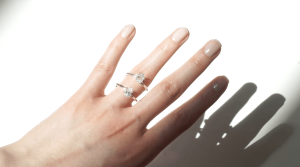
For smaller hands, a big pear ring can overwhelm if the setting sits too high. For wider fingers, a halo or wider band can help. In our studio, we often superimpose stones onto a client’s hand virtually.
Setting styles: halo, solitaire, and cathedral
A solitaire pear is clean and simple. It lets the outline do most of the work.
Halo engagement rings and pear designs add presence and can make the centre stone look larger. The trade-off is detail. If the halo does not follow the pear neatly, the ring can feel busy.
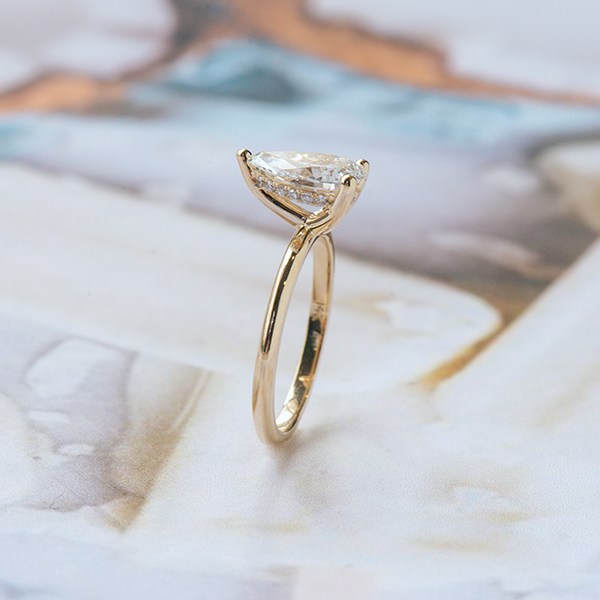
A cathedral setting pear engagement ring adds arches of metal from the band to the stone. It can feel structured, but usually adds height. If you want a lower profile, a solitaire or bezel may feel easier.
Durability and protecting the pointed tip
This is the concern people are right to ask about: the pointed tip is more vulnerable than the rounded end.
That does not make pear diamonds fragile. It means the setting should be intentional. A V-prong over the tip is one common protection. A bezel gives more coverage and a smoother outline. You can read more in our guide to bezel settings.
If you wear gloves often or work with your hands, tell your jeweller early. The profile and prongs can be adjusted before the ring is made.
Do pear shaped rings work for everyday wear?
Pear rings get a few honest complaints online, and they are worth taking seriously.
The larger surface can show fingerprints and hand oils, especially after lotion or sunscreen. This is aesthetic, not structural. A quick clean usually brings the sparkle back. Yellow gold, rose gold, and softer finishes can hide small smudges better than bright white gold.
Comfort depends on the setting. A high-set pear can catch more easily. A low-profile solitaire, bezel, or cathedral can feel smoother for daily wear.
Alternative stones and metals
Pear works beautifully beyond diamonds.
A pear drop sapphire ring can feel rich, classic, and durable. An aquamarine pear cut ring gives a softer blue look, although aquamarine needs more care. Morganite feels romantic in rose or yellow gold. An antique cut pear diamond can bring a softer vintage feeling. If you are considering morganite, our buyer’s guide to finding the right morganite is a helpful read.
Gold pear engagement rings feel warm and classic. White gold feels crisp. Rose gold softens the point and works well with coloured stones.

Lab-grown vs. natural pear diamonds
Lab-grown pear diamonds are a strong option if you want a larger look, higher colour grade, or more budget flexibility. Natural pears may appeal more if you value rarity or tradition. Neither is automatically better. Both need to be checked for symmetry, bow-tie, colour, and face-up spread. Our guide to lab diamonds vs. natural diamonds explains the trade-offs more fully.
Pricing and carat comparisons
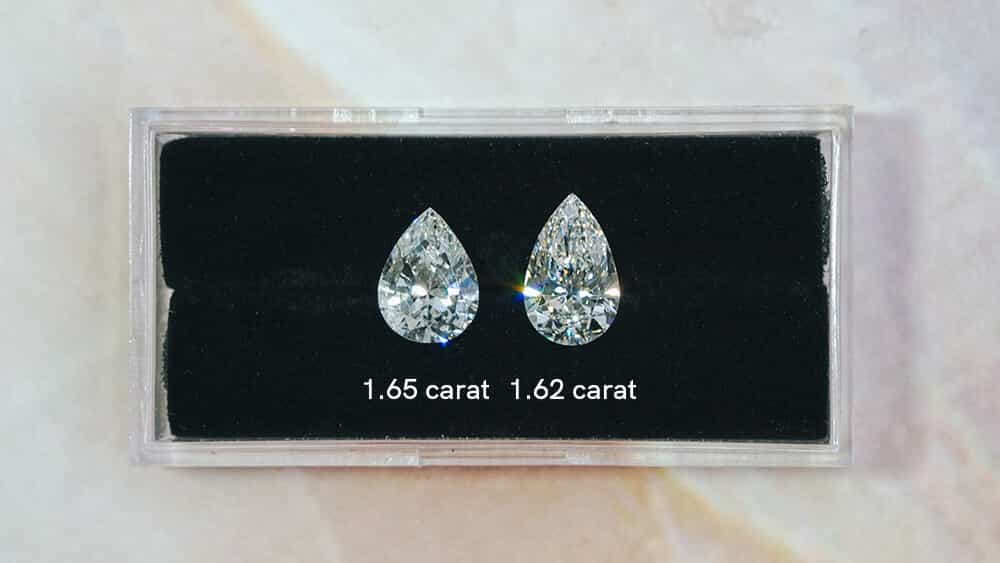
Carat is weight, not face-up size. With pears, millimetre measurements and proportions often tell you more than the carat number.
This shows up a lot with pears. A 1.62 carat pear and a 1.65 carat pear can look noticeably different because one is cut wider, longer, deeper, or shallower. Sparkle also comes back to cut, not just carat.
A 5 carat pear diamond ring on the finger can look very large because the shape spreads lengthwise. A 10 ct pear diamond ring is a true statement piece and needs planning around height, finger coverage, and balance. The best choice is the one that looks lively and wearable.
If you are searching for a pear shaped engagement ring in Canada, you can customize properly, ask to compare actual stones, scaled hand visuals, and setting profiles.
How to evaluate a pear diamond
Look at the stone unset and flat first. Compare it beside other pears so you can spot uneven shoulders, flat wings, heavy bow-tie, or strange proportions.
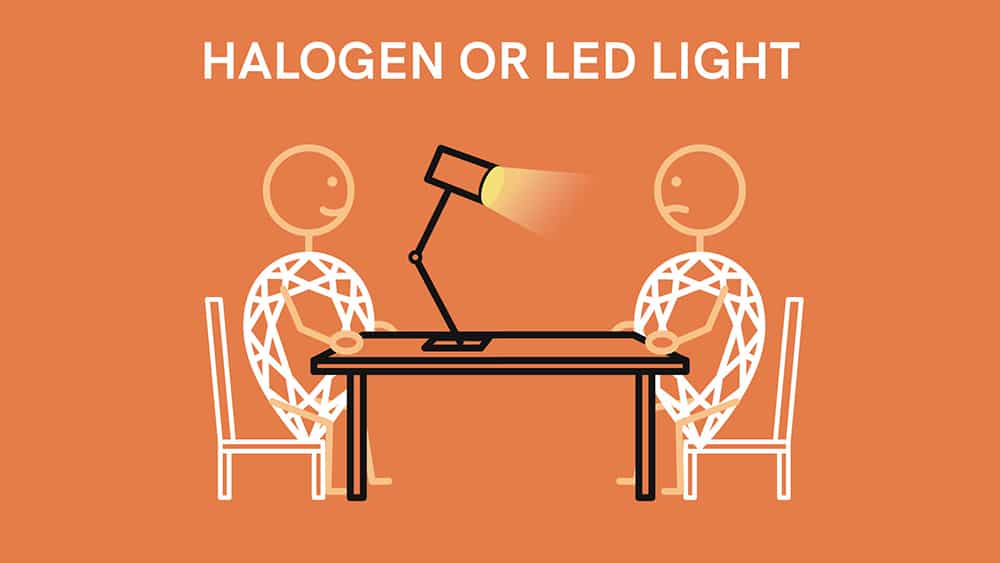
Then check it in three lighting conditions. Window light, not direct sun, helps you see colour. Flat fluorescent light can show shape and imperfections more honestly. Halogen or LED light is useful for sparkle testing as you twist the stone and watch how it moves.
Finally, look at it on the hand. Turn your hand, relax it, and see how the pear behaves. If you are comparing pear to oval, our guide on how to pick the perfect oval diamond can help you compare the two shapes.
Ready to compare pears properly?
If you are still weighing halo vs. solitaire, vertical vs. east-west, or natural vs. lab, that is normal. The concerns people raise about pear rings are real, but manageable with the right proportions, setting, and daily-wear planning.
At Engage Studio, we can show you pears side by side, test them in different lighting, compare settings, and help you see each option on your hand. Explore our custom engagement rings virtually or in Toronto, and we will walk through it without pressure.
Frequently Asked Questions
What is a pear shaped diamond?
A pear shaped diamond is a teardrop-style diamond with one rounded end and one pointed tip.
What length-to-width ratio should a pear diamond have?
Many people start between 1.50:1 and 1.80:1.
Do pear shaped diamonds look good on all hand shapes?
They can, but the best proportion changes from hand to hand.
Is pear or oval better?
Oval is softer and more symmetrical. Pear is more directional and distinctive.
Should I wear my pear vertically or horizontally?
Vertical is classic and lengthening. Horizontal, or east-west, feels more modern.
Does a halo make a pear diamond look bigger?
Yes. A halo can make the centre stone look larger from the top.
Is a pear diamond more prone to chipping than a round?
The pointed tip is more vulnerable, so a V-prong or bezel setting is recommended.
Why do fingerprints show more on pear shaped diamonds?
Pear diamonds can have broader reflective areas, so oils may be easier to notice.
Can I get a pear shaped sapphire ring?
Yes. Sapphire is a durable, classic coloured stone option.
What carat weight pear looks best on the hand?
It depends on finger size, ratio, and setting. A balanced 1.5 or 2 carat pear can look better than a larger stone that sits too high.
Are lab-grown pear diamonds good?
Yes, if the individual stone is well cut.
Can I wear a pear shaped diamond with a cathedral setting?
Yes. Cathedral settings work well if you like a lifted, structured look.
Do pear shaped rings look dated?
Not inherently. A clean solitaire, thoughtful halo, or balanced cathedral setting can feel current and classic.