
written by Engage Studio
Vintage engagement rings: Eras, authenticity, and how to choose
Published July 7, 2026
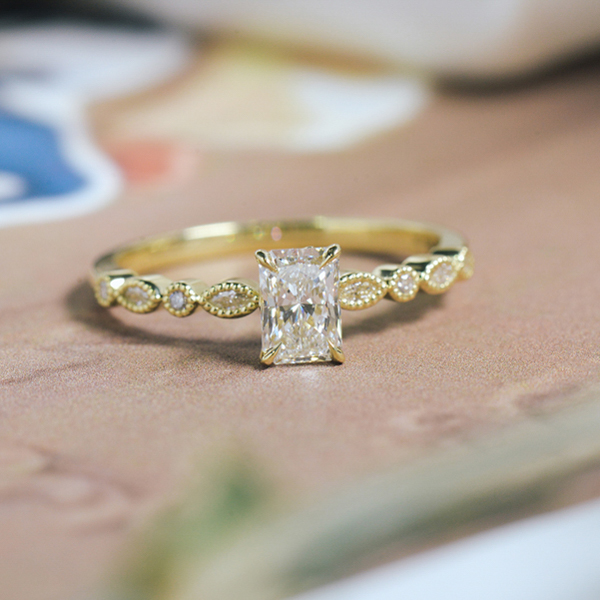
Vintage engagement rings have a pull that modern rings don’t always have. Maybe it’s the softer sparkle of an old cut diamond. Maybe it’s the tiny engraving on the shoulders. Or maybe it’s that feeling that the ring has already lived a life before yours begins with it.
That’s usually the real appeal. It’s not just about “I want something old.” Rather, it’s more like, “I want something with a story.”
At Engage Studio, we see this often with clients who feel disconnected from newer diamond ring templates. Some already know they’re looking for 1920s vintage engagement rings. Others only know they keep saving milgrain, warm gold, hand engraving, or rings that look a little less perfect in the best way. And that’s okay. You don’t need to know the era right away. You just need to know what keeps pulling you in.
Key takeaways
- Vintage engagement rings aren’t just old rings. The best ones carry the design language, craftsmanship, and mood of a specific era.
- Victorian, Edwardian, Art Deco, Retro, and 1950s rings each have their own details, stones, metals, and personality.
- Authentication matters. Hallmarks, wear patterns, construction, and provenance help separate genuine pieces from vintage looking engagement rings.
- A vintage ring can be meaningful, sustainable, and rare, but it may need resizing, restoration, or gentler daily care.
- Vintage inspired engagement rings can be the right path when you love the look but want a new structure made for modern wear.
Why vintage engagement rings are having a moment
Vintage engagement rings are having a moment, though honestly, they never really disappeared. There have always been people drawn to old European cuts, engraved shoulders, filigree, and stones that don’t sparkle in that perfectly modern way.
What’s changed, however, is that more couples are questioning whether a ring has to look brand new to feel special. For some, vintage feels more sustainable. Meanwhile, others look at its craftsmanship, rarity, or the idea that nobody else will have the exact same piece.
There’s also something refreshingly honest about antique jewelry engagement rings. They may show a little wear. The stone may have a softer glow. The setting might not look machine-perfect. But that’s often what makes the ring feel human.
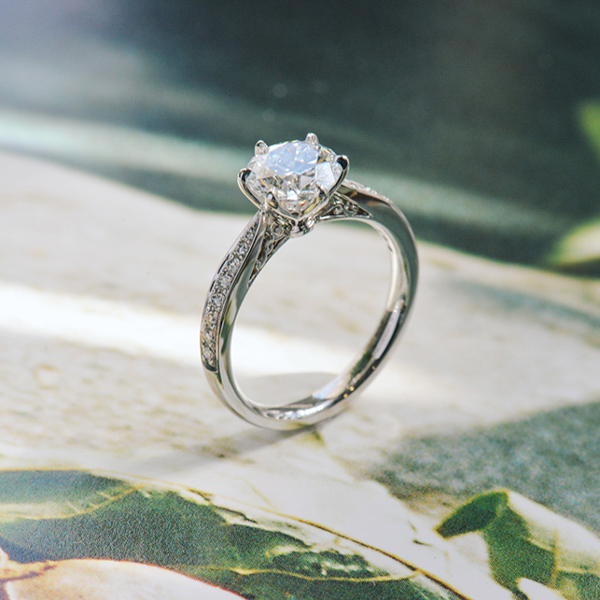
The eras of vintage rings
Vintage isn’t one style. A Victorian ring and a 1950s ring can both be vintage, but they’re not trying to say the same thing.
Victorian and Edwardian: soft romance and fine detail
Victorian and Edwardian rings often feel sentimental and delicate. You’ll usually notice:
- floral motifs
- old mine cut diamonds
- filigree
- tiny milgrain
- fine metalwork
- softer, more romantic proportions
Edwardian pieces, in particular, leaned into platinum and lace-like settings. They can look airy, almost weightless, but they’re not effortless to own. Fine detail can wear down over time. So if you love vintage antique engagement rings from this period, inspection matters. A beautiful ring still needs to be structurally sound.
Art Deco and 1920s vintage engagement rings
Art Deco is where vintage starts to feel more architectural. The 1920s weren’t about soft romance in the same way. Design became sharper, more geometric, and more confident.
You’ll often see:
- symmetry
- step-cut stones
- baguettes
- bezels
- crisp lines
- strong frames around the centre stone
That’s why vintage Art Deco engagement rings still feel so current. They’re old, yes, but not out of trend. A strong emerald cut, Asscher cut, or geometric halo can look just as sharp today as it did a century ago. If this is the era you keep saving, our guide to Art Deco engagement rings goes deeper into the style.

Retro and 1950s rings: warmer and bolder
Then you get to Retro and 1950s designs, and the mood changes again. These rings often feel fuller and more sculptural.
You’ll usually see more:
- yellow gold or rose gold
- raised settings
- curves and volume
- larger coloured stones
- bolder silhouettes
A vintage gold engagement ring from this period can feel warm and confident. It doesn’t have the fine lace-like detail of Edwardian work or the strict geometry of Art Deco. That’s the point. Retro engagement rings have a bit more drama and a very different kind of charm.
Not sure where to start?
Every custom ring at Engage Studio starts with a conversation, not a catalogue. Come talk it through with our team.
Contact UsMarquise cuts, emeralds, sapphires, and vintage stones
Vintage diamond engagement rings often feel different because the stones were cut differently. Old mine cuts and old European cuts don’t usually give you that sharp, even sparkle you see in many modern brilliant diamonds. Instead, they tend to have chunkier flashes of light and a softer glow, which is part of why they feel so romantic.
From there, the shape changes the mood again. Vintage emerald cut engagement rings usually feel clean, elegant, and a little more restrained. Vintage oval engagement rings, on the other hand, can feel softer and more romantic without becoming too ornate.
Marquise cuts also show up often in antique-inspired designs. If you’re drawn to vintage marquise engagement rings, look closely at how the points are protected. Those tips are beautiful, but they need support.
Then there are coloured stones, which can completely change the feeling of a vintage design. A vintage emerald engagement ring can be stunning, but emeralds need thoughtful setting and care. Our guide to emerald engagement rings and durability considerations is worth reading before you fall too hard for one.
If you want colour with a little more durability, vintage sapphire engagement rings and vintage ruby engagement rings are worth looking at too. Sapphires, especially, are often loved because they bring depth and colour without feeling too fragile. Our guide to sapphire engagement rings is helpful if blue, teal, or coloured sapphires keep catching your eye.
How to spot authentic vintage vs. reproductions
This is the part people worry about, and they should. “Vintage” gets used very loosely online.
A genuine vintage or antique ring should have details that make sense together. Look for:
- period-appropriate construction
- hallmarks or maker’s marks when available
- wear patterns that match the age
- stone cuts that fit the claimed era
- repair history or documentation
- settings that don’t look mass-produced
None of these prove everything on their own, but together they start to tell a story.
A reproduction isn’t automatically a problem. Many vintage style engagement rings are new pieces made with old-world details, and sometimes that’s exactly what you want. You get the look with a stronger structure, a specific stone, and fewer unknowns.
The issue is paying antique prices for a mass-produced vintage-looking ring. So ask direct questions. What era is it from? Has it been repaired? Are the stones original? Is there documentation? If the answers feel vague, take your time.
Cost, restoration, and hidden work
The price of vintage jewelry engagement rings can vary wildly. Two rings can look similar in a photo, but one may have a rarer cut, stronger provenance, better condition, or more handwork.
So don’t only budget for the sticker price. A ring may need:
- resizing
- prong rebuilding
- stone tightening
- polishing
- cleaning
- a custom wedding band
Vintage antique wedding rings can also need extra care if you’re pairing them into a daily set.
That doesn’t make vintage a bad value. It just means the value isn’t only carat weight. It’s originality, craftsmanship, rarity, and whether the ring can be made safe for real wear.
Sizing, care, and making a 100-year-old ring wearable
A 100-year-old ring can be wearable, but it shouldn’t be treated like a brand-new heavy setting.
Before committing, check the prongs, band thickness, stone security, previous repairs, and whether the ring can be resized without damaging the design. Vintage silver engagement rings, very thin bands, and delicate filigree may need a lighter hand.
Metal matters too. Older platinum, yellow gold, and white gold can wear differently depending on construction. Our guide on how to choose your engagement ring metal can help you understand strength, colour, and maintenance.
Bezel settings can also help with vintage and vintage-inspired rings because they frame the stone securely. Our guide to bezel-set engagement rings explains why that setting can be both beautiful and practical.
Where to find vintage engagement rings in Canada
If you’re searching for vintage engagement rings in Canada, you’ll probably come across estate jewellers, antique dealers, online marketplaces, auctions, and custom studios. Each path has tradeoffs.
Estate sellers may have genuine pieces, but condition varies. Marketplaces offer range, but authentication can be harder. A jeweller who works with vintage engagement rings in Toronto can help inspect, restore, resize, or adapt a piece you’ve already found.
And if you can’t find the exact ring, unusual vintage engagement rings can still be designed from scratch using vintage cues: milgrain, hand engraving, coloured stones, Art Deco geometry, or old-world proportions.
Vintage-inspired or genuine vintage: which path is right?
If you’re drawn to vintage because of its history, craftsmanship, or uniqueness, that instinct is worth exploring. But authentication, restoration, resizing, and proper adaptation for modern wear need expert hands, especially if you want the ring to last. At Engage Studio, we work with vintage pieces regularly, from sourcing and authentication to restoration and resizing. You can explore our custom engagement rings process to talk through a piece you’ve found or a vintage-inspired path, in Toronto or virtually.
Frequently Asked Questions
Are vintage engagement rings durable enough for daily wear?
Some are, yes, but it depends on condition, stone, setting, and metal. A well-restored ring can be worn daily, while delicate antique pieces may need more care.
How do I know if a vintage ring is authentic?
Look for hallmarks, maker’s marks, period-appropriate construction, wear patterns, and documentation. A professional inspection is the safest route.
What’s the difference between vintage, antique, and retro engagement rings?
Antique usually means 100 years or older. Vintage is often used for pieces at least a few decades old. Retro usually refers to bold mid-century styles, especially from the 1940s and 1950s.
Can a vintage ring be resized or modified?
Often, yes, but not always. Delicate engraving, filigree, thin bands, and certain stone settings can limit what’s possible.
Is a vintage emerald engagement ring a good choice?
It can be, but emeralds need care. They’re beautiful and historic-looking, but more brittle than diamonds or sapphires.
Are 1920s Art Deco rings still in style today?
Yes. Their symmetry, geometry, and clean lines still feel sharp and modern, which is why Art Deco remains one of the most requested vintage looks.
Is it bad luck to wear a vintage ring from someone else’s marriage?
That’s personal. Many people see vintage rings as a continuation of history, not bad luck. If the ring feels meaningful to you, that matters more than superstition.
Can I get a vintage-style ring that’s actually new?
Yes. A new vintage-inspired ring can use milgrain, engraving, old-world cuts, or Art Deco structure while being built for modern daily wear.