
written by Engage Studio
The 4 cs of diamonds: The rules and how to hack them
Published June 4, 2026
How to hack the 4Cs of diamonds
Hi there! Glad you found us.
If you are someone in the 99% who wants to buy diamonds exactly the way the diamond industry wants you to buy them, please do not read on. However, if you want to learn how to hack the 4Cs of diamonds to your benefit, then this guide is for you.
Most likely, this is a very exciting point in your life. You and your person have found each other. Love is in the air.
And somewhere between ring screenshots, family opinions, and late-night Google searches, you’ve probably run into the same four words over and over again: cut, colour, clarity, and carat.
Now, don’t get intimidated.
A diamond is not your only option. But if you are looking for one, it helps to know what you are actually getting into. The 4Cs can be useful, but only if you know how to use them. Otherwise, they can make you overpay for things you may never see and compromise on the one thing that makes a diamond look alive.
So let’s peel off the marketing layer.
Key Takeaways
- Cut is the one C you should never compromise on because it controls how alive the diamond looks.
- G–H colour can still look beautifully white in most settings.
- VS2 or eye-clean SI1 clarity is often enough for most budgets.
- Carat weight matters, but it does not always show how impressive a stone will look.
What are the 4Cs, and why should you actually care?
The 4 Cs of diamonds explained simply are cut, colour, clarity, and carat.
Cut is how well the diamond has been shaped. Colour is how white or warm it appears. Clarity refers to inclusions or blemishes. Carat is the diamond’s weight.
On paper, this sounds simple. In real life, it is much more layered.
The 4Cs are broad. Very broad. They make diamond buying easier to understand, but they also flatten a lot of detail. Factors such as proportions, symmetry, shape, spread, setting style, and normal lighting all affect how a diamond looks.
So treat the 4Cs as a starting point, not the final decision. They’re more like a cheat code if you know which numbers matter and which ones are mostly noise.
That is the hack.
More importantly, a useful diamond buying guide should not just define terms. It should help you make better trade-offs.
Why cut is the one C you should never compromise on
Cut always comes first.
Not carat. Not colour. Not clarity. Cut.
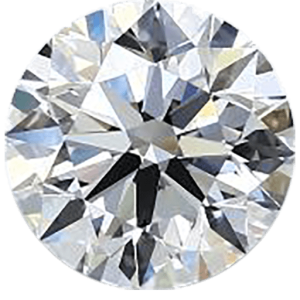
Cut is what makes a diamond look alive. It controls how light enters the diamond and comes back to your eye. A well-cut diamond can look bright and full of movement. A poorly cut diamond can look flat, even if the colour and clarity grades look impressive.
This is one of the biggest buyer mistakes we see. Someone finds a larger diamond with “better” specs for the same price, but once we look closer, the cut is doing less work.
That is not a bargain. That is a trade-off hiding in plain sight.
For fancy shapes like oval, emerald, pear, radiant, or cushion, you also need to look at shape, symmetry, depth, bow-tie effect, and face-up spread.
If you want to go deeper on this mistake, read the one thing people get wrong when looking for a diamond.
How much does colour actually matter?
Colour is where buyers often overspend.
When jewellers talk about diamond colour, they are usually referring to the GIA colour scale. It starts at D, which is the most colourless grade, and moves down the alphabet as the diamond shows more warmth.
D, E, and F diamonds are considered colourless. G, H, I, and J are near-colourless.
Can you see D versus J side by side? Usually, yes.
Can most people spot D versus G once the diamond is set and worn every day? Usually, no.
That is why G or H can be a smart place to land. You still get a diamond that looks bright and white to most eyes without paying for a grade difference that may not change the final look much.
The setting matters too. Yellow gold can make a warmer diamond feel soft and intentional. White gold or platinum may make colour more noticeable. A bezel setting can also affect how the diamond reads. You can read more in our guide to bezel set rings.
Our advice: do not pay for colour your eye cannot appreciate. Put that budget toward cut, size, or design instead.
Clarity: what can you actually see?
Clarity sounds intimidating, but the real question is simple:
Can you see the inclusion?
Clarity grades describe how visible a diamond’s natural inclusions or blemishes are. VS means “Very Slightly Included,” while SI means “Slightly Included.” The number matters too: VS1 is usually cleaner than VS2, and SI1 is usually cleaner than SI2.
Most clarity grading is done under magnification. So the goal is not perfect clarity. The goal is eye-clean clarity.
A VS1 diamond can be beautiful. So can VS2. Some SI1 diamonds can also be great if the inclusions are small, light-coloured, off to the side, or hidden by the setting.
But do not guess. Two diamonds with the same clarity grade can look very different.
Instead of asking, “What clarity grade should I buy?” ask: can I see anything, does it affect beauty or durability, and will the setting hide it?
That is a much better way to shop.
Carat weight: the most misunderstood number
Carat is the C people talk about most, but it is often misunderstood.
Carat measures weight, not face-up size. Two one-carat diamonds can look different depending on how they are cut. One may look larger from the top. Another may carry weight in the depth and look smaller.
Milestone numbers matter too. A 1.00 carat diamond often costs more than a 0.90 carat diamond, even if the visual difference is small.
Choosing just under a milestone can be one of the easiest hacks in how to buy a diamond without feeling like you compromised.
An elongated oval can give more finger coverage than a round diamond of the same carat. Carat should never be chosen alone.
How to prioritize the 4Cs when you have a real budget
This is where the 4Cs of diamonds become useful. Not as a checklist. As a budget strategy.
If you are wondering which of the 4Cs matters most, our answer is cut. Start there, then adjust everything else.
1. Start with cut
Choose the best cut you can within your budget. A lively diamond often looks more impressive than a bigger diamond with poor light performance.
2. Choose a smart colour range
For a crisp white look in white gold or platinum, G–H is often strong. For yellow gold, rose gold, or vintage-inspired settings, you may be able to go warmer.
3. Aim for eye-clean clarity
Do not pay extra for clarity grades you cannot see. VS2 is often a great zone. SI1 can work if the specific stone checks out.
4. Then adjust carat
A slightly smaller diamond with a better cut can look more beautiful than a larger one that feels dull.
For example, a 1.35 carat diamond with excellent cut, G colour, and VS2 clarity may look better than a 1.50 carat diamond with weaker cut, D colour, and VS1 clarity.
Our guide to custom engagement ring cost explains how stone, design, and craftsmanship work together.
What this looks like in practice at Engage Studio
At Engage Studio, we do not start by asking clients to pick the “best” diamond on paper.
We start by asking what actually matters to you.
Do you want the stone to look larger? Do you want it crisp and icy white? Are you drawn to vintage warmth? Are you open to lab diamond, natural diamond, moissanite, morganite, or another stone?
Those answers change the search.
From there, we curate stones that fit your priorities, design, setting, and budget. Actual options you can compare with context.
A diamond with “lower” grades may win because it has the right shape, brightness, and presence. That is the part the 4Cs cannot fully capture.
Final thought: use the 4Cs, don’t let them use you
The 4Cs of diamonds are helpful, but they are not the boss of your ring.
They help you compare stones, ask better questions, and avoid paying for grades that do not change what you see every day.
The real hack is knowing where to be strict and where to be flexible: strict on cut, thoughtful with colour, practical with clarity, and realistic with carat.
At Engage Studio, we help you compare curated stone options, talk through the trade-offs, and design a ring that is handcrafted in Toronto around the person who will wear it.
A virtual consultation is a simple place to begin. No pressure to decide on the spot. Just a clearer way to understand what your budget can do and which diamond choices are worth caring about.
FAQs
Which of the 4Cs matters most when buying a diamond?
Cut matters most because it has the biggest effect on how bright and alive the diamond looks.
Can you tell the difference between D and G colour in real life?
Sometimes, but not always. Once the diamond is set and worn every day, many people cannot easily spot the difference.
Is VS1 or VS2 clarity worth the extra cost?
VS1 can be worth it for larger diamonds or step-cut shapes. For many diamonds, VS2 is a great sweet spot if the stone is eye-clean.
Is it better to buy a bigger diamond with lower grades or a smaller diamond with higher grades?
Usually, we would choose a slightly smaller diamond with a stronger cut over a bigger diamond that looks flat.