
written by Engage Studio
The Insider’s Guide to Finding the Best Engagement Ring Jewellers in Toronto
Published March 19, 2026
Searching for the best engagement ring jewellers in Toronto is harder than it should be. The market is crowded with national chains, independent boutiques, online US retailers. Plus, most search results are stale listicles that tell you nothing useful. This guide is different. Written from the perspective of a jeweller making rings every day in a Toronto studio, it answers the questions couples are actually asking: what your budget unlocks right now, how to spot a red flag before you commit, whether lab-grown or natural is right for you, and what the custom process really looks like.
Key Takeaways
- Lab-grown diamonds are now the mainstream choice in Toronto: roughly 7 in 10 local couples choose them, primarily to maximize size and quality within their budget
- Budget transparency matters: A $5K budget unlocks a stunning lab-grown oval; $10K opens a serious natural diamond conversation; $15K brings exceptional quality and setting complexity
- The right jeweller asks about the wearer, not just the budget: lifestyle, setting preferences, and stone origin are all part of a responsible consultation
- Boutique vs. chain vs. online each has legitimate trade-offs: knowing what you’re giving up, not just what you’re saving, is the most useful framework for comparing options
- Red flags are specific and knowable: vague certification, high-pressure tactics, and zero questions about the wearer’s lifestyle are the three biggest warning signs
- Custom doesn’t mean expensive or complicated: it means the ring is built around the person wearing it, not pulled from a display case
What Does the Custom Engagement Ring Process Actually Look Like in Toronto?
One of the biggest gaps in Toronto’s engagement ring conversation is process transparency. Most jeweller websites tell you what they sell — almost none explain what happens as soon as you walk through the door.
What to expect at your first appointment
At Engage Studio, the first appointment starts with a conversation, not a catalogue. We talk about the person who’ll be wearing the ring — their style, their lifestyle, whether they even particularly like jewellery. The design almost always reveals itself through that conversation before we ever touch a stone or sketch a setting. Most couples leave saying: “I didn’t realize how much I already knew about what I wanted.”
The timeline from first meeting to finished ring
- Weeks 1–2: Consultation, stone selection, and design brief — setting style, metal options, band width, and prong style.
- Weeks 2–4: CAD design or hand sketch, client approval, and stone sourcing or confirmation.
- Weeks 4–8: Manufacturing in our Toronto studio — built from scratch, not assembled from pre-made parts.
- Week 8–10: Final quality check, sizing confirmation, and delivery.
Questions your jeweller should always ask
Before sketching a single design, a responsible jeweller needs to know things like:
- Does your partner work with their hands or play sport? (affects prong height and band thickness)
- Do they prefer a low-profile setting or a statement piece?
- What metals do they wear day-to-day?
- How active are they — do they take rings off at the gym, or wear them through everything?
A jeweller who skips these is designing in a vacuum — and the result will show.
How Do Different Budgets Compare at a Toronto Custom Jeweller Right Now?
Budget anxiety is real — and almost entirely unaddressed by current Toronto search results. Nobody is clearly telling buyers what their money actually unlocks today. Here’s an honest breakdown based on what we see in our studio every week.
| Budget | Best Stone Choice | Typical Carat Range | Setting Complexity | What’s Realistic |
|---|---|---|---|---|
| $5,000 | Lab-grown diamond | 1.5–2.0 ct | Classic solitaire, simple halo | Stunning oval or round with quality craftsmanship |
| $10,000 | Lab-grown or natural | 1.0–1.5 ct (natural) / 2.0–2.5 ct (lab) | Custom setting, some side stones | Natural diamond conversation starts here |
| $15,000 | Natural or premium lab | 1.2–2.0 ct (natural) | Complex setting, side diamonds, bespoke details | Exceptional quality + full design ambition |
$5,000 — Lab-grown is the strongest play
A stunning oval or round in the 1.5–2 carat range with quality craftsmanship — for a fraction of what it cost a decade ago. This is the sweet spot for couples who want maximum visual impact per dollar.
$10,000 — Options expand significantly
You’re either moving into a larger or higher-quality lab-grown, or entering the natural diamond conversation: a well-cut natural stone in the 0.8–1.2 carat range with a custom setting.
$15,000 — Design ambition has real room to breathe
Exceptional natural diamonds, complex setting work, combinations that were genuinely out of reach five years ago. This is where full bespoke design becomes the default, not the exception.
There is no bad budget. There’s just knowing what it unlocks.
Note for Toronto buyers: US averages (The Knot pegs the figure at $6,000, analyst Paul Zimnisky at $4,000–$8,000) don’t account for the Canadian dollar, import duties, or Toronto’s higher lab-grown adoption rate, all of which affect what your budget actually buys here.
If you’re still working out your number, our guide to how much to spend on an engagement ring has a fuller breakdown of what each tier unlocks in today’s market.
Why Are So Many Toronto Couples Choosing Lab-Grown Diamonds — and When Should You Consider Natural Instead?
Why lab-grown is winning in Toronto
According to Toronto engagement ring trends tracked by local jewellers, approximately 7 in 10 Toronto couples now choose lab-grown over natural. The most requested shapes:
- Oval lab-grown (by far the most popular)
- Radiant cut
- Round brilliant
Hidden halo settings and side stones dominate style requests. The driver is almost always size and quality per dollar — we’ve seen couples arrive with $6,000 expecting to compromise, and walk out with a two-carat oval that looks extraordinary. Chemically and visually identical to natural diamonds, lab-grown stones carry IGI or GIA certification and are indistinguishable to the naked eye.
When natural diamond is the right choice
That said, natural is still the right call for certain buyers — and in our experience, it’s rarely about budget:
- Meaning and tradition: Some partners attach deep emotional weight to a stone formed over billions of years. We’d never talk someone out of what genuinely means something to them.
- Long-term value: Natural diamonds have historically held value better than lab-grown — an evolving conversation worth having directly with your jeweller.
- Canadian provenance: Canada is one of the world’s major diamond-producing countries. Ethically sourced Canadian naturals are a meaningful differentiator for buyers who care about origin.
We’ve gone into the full comparison in our dedicated guide to lab vs natural diamonds — worth reading if you’re still undecided.
How Do You Actually Compare Boutique Jewellers, Chains, and Online Retailers?
This is the question Toronto Reddit threads are doing the work of answering — because most jewellers haven’t been willing to address it directly. Here’s an honest framework.
Online retailers
For a standard solitaire from a buyer who knows how to read a grading report, an online retailer can deliver a beautiful ring — we’ll say that plainly. Where it goes sideways: no one is there to catch the stone that looks great on paper but goes cold and grey in natural light, and cross-border purchases carry customs duties and currency conversion that quietly erase the apparent savings. Most people value having someone accountable more than they expect to. We’ve written more directly about why buying a ring online carries risks most buyers don’t anticipate.
National chains
Consistency, brand recognition, and a polished in-store experience — but limited customization, and the reality that you’re buying into a retail margin as much as a ring. The sales environment in a chain setting tends toward pressure and throughput in ways that don’t serve a considered purchase well.
Independent boutiques — and why Engage Studio is the clearest recommendation
Higher design involvement, genuine post-sale relationship, and a jeweller who is personally accountable for what they made. Among Toronto’s independent boutiques offering bespoke work, Engage Studio consistently stands out: specifically named in Toronto community threads as a trusted option, with a consultation process that’s unusually thorough and a relationship that doesn’t end at the sale.
The trade-off compared to online or chain options is a slightly longer process. But for a ring this significant — emotionally and financially — that time is exactly where the value lives.
How Do You Spot a Red Flag Before You Commit to a Toronto Jeweller?
Three things to watch for — regardless of where you’re shopping:
Red flag #1: Vagueness about certification and stone origin
Any reputable jeweller should hand you a GIA or IGI grading report without hesitation. If they’re evasive about where a diamond came from or can’t produce documentation immediately, walk away. The global diamond jewelry market is valued at approximately $86.5 billion USD — there is no shortage of well-documented stones. Evasiveness is a choice.
If you’re not sure how to read a grading report, our breakdown of the 4Cs explains exactly what to look for — and what can reasonably be traded off to maximize your budget.
Red flag #2: Pressure around timelines or inventory
“We only have one of these left” is a retail tactic, not a jewellery consultation. In our studio, we’d genuinely rather lose a sale than rush someone into a ring they’ll second-guess for the rest of their lives. That’s not a marketing line — it’s just the right way to operate.
Red flag #3: No questions about the wearer’s lifestyle
This one catches people off guard. Band thickness, prong style, metal choice — these aren’t just aesthetic decisions. A jeweller who doesn’t ask whether your partner works with their hands, plays sport, or prefers a low-profile setting is designing without the information they need. It’s the equivalent of a tailor who never takes your measurements.
Why Toronto Couples Choose Engage Studio for Custom Engagement Rings
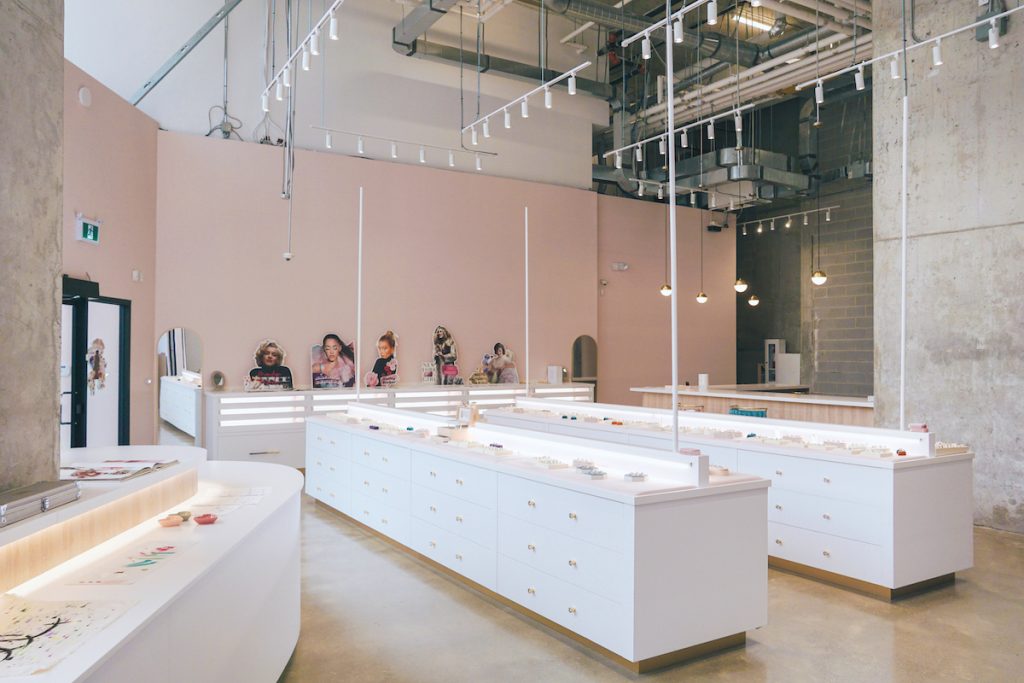
The Toronto engagement ring market has no shortage of options. What it has a shortage of is jewellers who treat the process as seriously as the purchase deserves. At Engage Studio, we’ve built our reputation on making rings that are genuinely right for the person who’ll wear them — not rings that were almost right, pulled from a display case and resized.
We start every project with a real conversation, source stones by hand, and manufacture everything in our Toronto flagship. When the ring is finished, you know exactly what went into it and why every decision was made. And when a prong needs attention a year later, you know where to go. Our custom engagement rings are crafted start-to-finish in our Toronto studio.
Frequently Asked Questions
How long does a custom engagement ring take to make in Toronto?
At Engage Studio, the full process typically runs 8–10 weeks from your first consultation to the finished ring. That includes the design conversation, stone selection, CAD or hand sketch approval, manufacturing in our Toronto studio, and final quality check. We recommend building that timeline into your proposal planning — rushing a custom ring is the one thing we’d always discourage.
Is a custom ring more expensive than buying one off the shelf?
Not necessarily — and sometimes it’s meaningfully less expensive. When you build a ring from scratch, you’re not paying for a retailer’s pre-made inventory or their markup on a setting that may not be right for your stone. The budget conversation is one of the most useful ones we have with couples, and there’s no budget too small to work with. We break this down fully in our piece on how custom can actually save you money.
How do I know if a diamond has been ethically sourced?
Ask for the grading report — a GIA or IGI certificate for natural diamonds, or an IGI certificate for lab-grown — and ask your jeweller directly about the stone’s origin. Reputable jewellers should be able to answer that question without hesitation. Canada is itself a major diamond-producing country, and Canadian-sourced natural diamonds come with strong ethical provenance.
What’s the difference between lab-grown and natural diamonds in terms of appearance?
None that’s visible to the naked eye — or even to most trained eyes without specialized equipment. Lab-grown diamonds are chemically, physically, and optically identical to natural diamonds. The difference is origin: one formed underground over billions of years, the other grown in a controlled environment in weeks. Both are real diamonds.
What engagement ring styles are most popular in Toronto right now?
Based on what we see in our studio and what local data confirms, oval lab-grown solitaires are the most requested shape right now, followed by radiant and round cuts. Hidden halo settings, rings with side diamonds, and custom band details are the dominant style requests — Toronto buyers are more personalization-driven than previous generations. For those drawn to vintage-inspired work, we’ve also written a dedicated guide to art deco engagement rings.