
written by Engage Studio
Round vs. Oval Engagement Rings: Why This Decision Isn’t as Simple As it Sounds
Published June 1, 2026
Key Takeaways
- Oval diamonds usually look larger than round diamonds of the same carat weight because their elongated shape covers more of the finger
- Round diamonds produce the most sparkle, while oval diamonds trade some intensity for a softer, more spread-out glow
- Hand shape matters: oval diamonds can elongate shorter or wider fingers, while round diamonds tend to feel more balanced on longer, narrower hands
- Band and setting choices change everything. Thinner bands can enhance length, while styles like three-stone rings can shift how the diamond sits visually
- Both shapes work beautifully in custom designs, so the best choice comes down to what feels proportionate and natural on your hand, not just what looks good in photos
Round vs Oval Engagement Rings: At a Glance
| Feature | Round Diamond | Oval Diamond |
|---|---|---|
| Sparkle | Maximum brilliance and fire | Softer, more diffused sparkle |
| Size Appearance | Looks true to carat weight | Appears larger due to elongated shape |
| Effect on Hand | Balanced and centered look | Elongates and slims the finger |
| Best For | Long fingers, classic styles | Shorter/wider fingers, modern look |
| Light Performance | Consistent and predictable | Can show bow-tie shadow if poorly cut |
| Price per Carat | Typically higher | Often better value for size |
| Overall Feel | Timeless and traditional | Slightly more modern and distinctive |
Quick takeaway: Choose round for maximum sparkle and consistency; choose oval if you want a larger-looking diamond with a more elongated shape on the hand.
Most people expect this to be a quick decision.
Pick a shape, move on.
But once you actually start comparing oval vs round engagement rings, it rarely stays that simple.
You notice small differences first. One looks slightly bigger. One catches the light more. One just feels different without you being able to explain why. Then suddenly you’re comparing specs, reading guides, opening more tabs than you planned.
That’s usually where it slows down.
Not because the options are bad, but because both are good — just in different ways.
Instead of trying to figure out which one is “better,” it’s more useful to look at how each one behaves in real life. Browsing different engagement ring styles or even seeing how custom engagement rings are designed around each shape tends to make things clearer.
The core difference (without overthinking it)
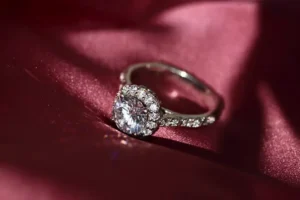
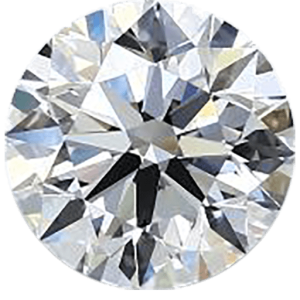
A round diamond is built for precision. Every facet is aligned to reflect light back evenly, which is why it gives off that sharp, bright sparkle people immediately notice.
That’s why it’s been the standard for so long. It just works in almost every situation.
Meanwhile, an oval diamond works differently. It spreads light across a longer shape, so instead of concentrated brilliance, you get a softer, more elongated glow.
That’s really the trade-off. Round maximizes light return and intensity. Oval trades some of that intensity for size presence and shape.
Same brilliance concept, just expressed differently — and that difference is what you’ll actually see when it’s on your hand.
If you’ve already looked into basics like understanding the 4Cs, this is where the decision becomes less technical and more personal.
Size perception: why oval usually looks bigger
This is the first thing most people notice.
You compare a round and an oval diamond with the same carat weight… and the oval almost always looks larger.
It’s not a trick. It’s just how the shape spreads.
Oval diamonds stretch across your finger, which creates more visible surface area. That’s what gives that “bigger” impression.
Round diamonds are more compact. Everything is centered, so visually they don’t take up as much space.
This matters if you’re trying to get the most presence out of your budget. A guide like custom engagement ring costs helps put that into perspective.
Sparkle and light: where round still leads
If sparkle is your top priority, round diamonds still come out ahead.
They’re cut to reflect light as efficiently as possible. That’s what creates that sharp, bright flash you notice immediately.
Oval diamonds sparkle too, just differently. More spread out. Slightly softer. Less concentrated.
You might also notice a darker area across the center — the bow-tie effect. This happens when light doesn’t reflect evenly through the middle of the stone, creating a subtle shadow that looks like a bow tie.
In well-cut ovals, it’s usually faint and doesn’t take away from the overall look. But in more noticeable cases, it can make the center appear less bright compared to the edges, which slightly reduces that “all-over sparkle” effect.
That’s why two oval diamonds can look completely different even if they’re the same size on paper.
Round diamonds are more predictable. What you see is usually consistent.
If you want to actually see the difference, watching real stones in person helps more than static photos ever will.
How each shape looks on your hand
This part gets overlooked, but it’s often what ends up deciding things.
Once the ring is on your hand, the difference between a round and oval engagement ring becomes much more obvious than it does on paper.
Oval
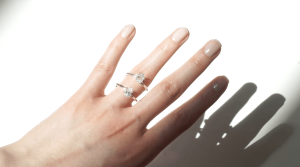
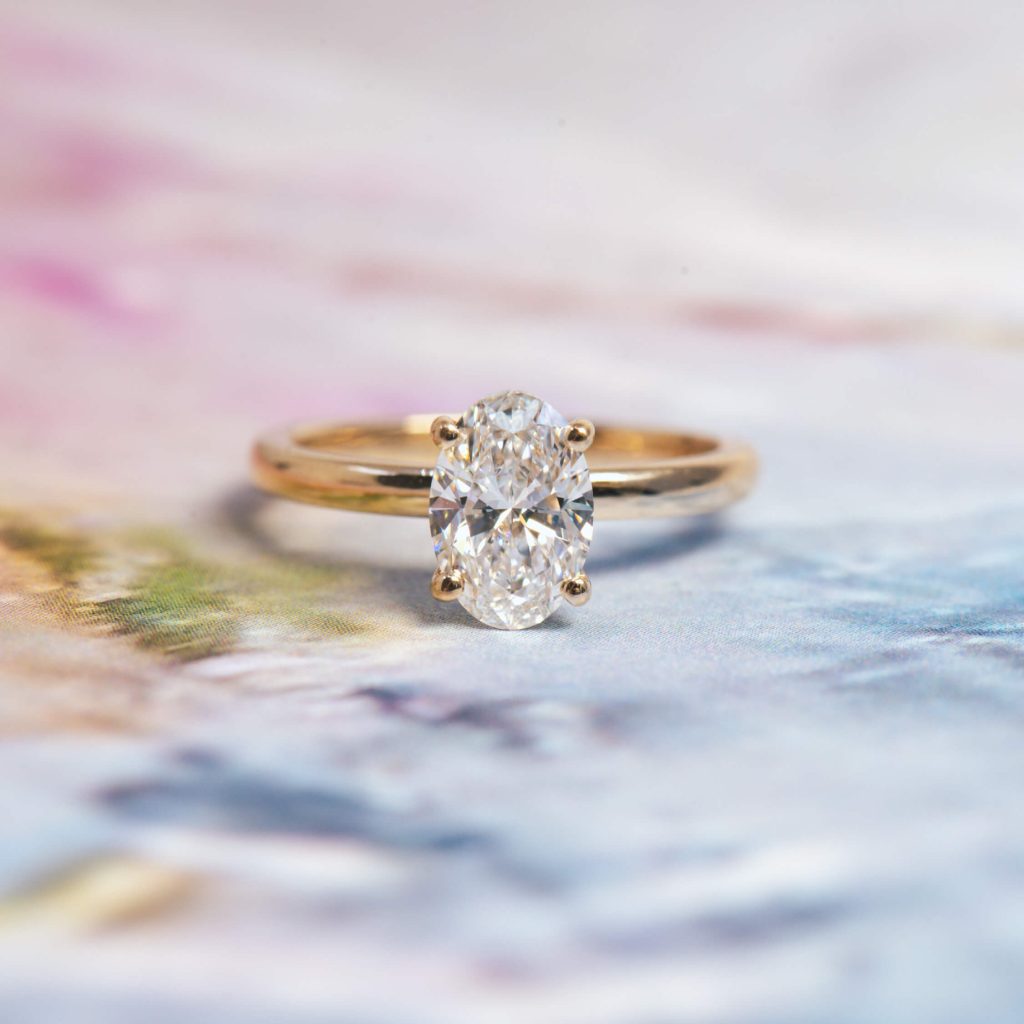
Ovals naturally elongate your finger. The shape draws your eye vertically, which can make fingers look longer and slimmer.
If your fingers are shorter or wider, this usually works in your favor. That’s because the extra length of the stone helps offset width, so your hand looks more balanced overall.
This is especially noticeable with thinner bands. An oval diamond on a slim band creates a clean, lengthened look without feeling too heavy.
There is a trade-off, however. On very long, narrow fingers, an oval can sometimes feel too stretched. So instead of balancing the hand, it can exaggerate the length even more — especially if the diamond itself is very elongated.
In those cases, choosing a slightly wider band or a less elongated oval ratio can help bring back proportion.
Round
Round diamonds don’t change the shape of your hand in the same way. Rounds sit more centrally and create a balanced, grounded look.
That’s why they work well on longer fingers. Instead of stretching things further, they keep everything feeling proportionate and even.
Even if your fingers are already long, a round diamond tends to feel more natural — not trying to “correct” anything, just complementing what’s already there.
On shorter fingers, though, a round diamond can sometimes feel a bit more compact, especially if paired with a thicker band. It doesn’t give that same lengthening effect an oval does.
That’s where setting choices start to matter more. A thinner band can help open things up visually, while something like a three-stone ring can add horizontal spread, which changes how the diamond sits on your hand.
Designing around the diamond (where preferences start to show)
This is where things become less theoretical.
Both shapes work in most settings, but they behave differently once you start designing around them.
Round diamonds are straightforward. They fit into almost anything without needing much adjustment.
Oval diamonds give you more flexibility. Because of their shape, you can adjust orientation, band flow, spacing — small changes that actually affect the final look.
This is usually where people start leaning one way without even realizing it. Not because they planned to, but because one starts to feel more natural.
That’s also why many people move toward a more tailored approach. Once you understand the difference between custom vs ready-made engagement rings, it’s easier to see why designing around your preferences makes a real difference.
Even details like metal choice matter. This comparison of platinum vs white gold engagement rings shows how those small decisions change the overall feel.
Price differences (and what they really mean)
Round diamonds usually cost more per carat.
Part of that is demand. The other part is how they’re cut — more of the rough diamond is lost in the process.
Oval diamonds are more efficient, which often means better value for size.
If you’re comparing shapes more broadly, even looking at alternatives like cushion cut options helps you understand how shape affects both appearance and pricing.
Common mistakes people make when choosing between oval and round
One of the biggest mistakes is focusing too much on carat weight.
A larger-looking oval doesn’t automatically mean it’s the better choice. If sparkle matters more to you, a round diamond might still feel more impressive in person.
Another mistake is relying too much on photos.
Lighting changes everything. What looks perfect online can feel completely different in real life, especially with oval stones where cut quality varies more.
And then there’s the setting. People often treat it as a secondary decision, when it actually plays a huge role in how the diamond looks once worn.
A simple way to decide (if you’re stuck)
If you’re still going back and forth, this usually helps:
- If your priority is sparkle → go round
- If your priority is size appearance → go oval
- If your priority is something safe and timeless → go round
- If your priority is something slightly more modern → go oval
And if you’re still unsure after that? Default to round. Not because it’s better, but because it’s the most consistent choice. It’s harder to regret.
So which one should you choose?
At this point, it usually comes down to what you keep coming back to.
Not what looks best on paper, but what feels right when you imagine wearing it every day.
Looking at full designs — even styles like Art Deco engagement rings — often makes that clearer than comparing specs alone.
Design your own engagement ring with Engage Studio
There’s a lot wrapped up in this decision. Shape, sparkle, how it looks on your hand, how it holds up over time. And when you’re choosing between something like oval and round, the differences can feel small on paper but surprisingly noticeable in real life.
That’s where most people get stuck. Not because they don’t have options, but because they’re trying to figure it out without seeing how those options actually behave side by side.
At Engage Studio, we take that guesswork out of the process. Instead of choosing from pre-made designs, you get to compare carefully selected stones in person, see how round and oval diamonds perform under real lighting, and explore how different settings change the overall look. From there, we build the design around what actually suits you — not what happens to be in stock.
Everything is laid out clearly, from pricing to timelines, and you’ll have the chance to review a sketched or 3D model before anything is finalized.
If you’re ready to move past comparison and design something that’s genuinely yours, explore our custom engagement rings and start the conversation.
Frequently Asked Questions
Is oval or round more popular right now?
Round diamonds are still the most popular overall. That hasn’t really changed. However, oval diamonds have become much more common in recent years, especially for people looking for something slightly different without going too far from tradition.
Does an oval diamond really make fingers look longer?
Yes, it does. The elongated shape draws the eye vertically, which creates a subtle lengthening effect on the finger. It’s one of the main reasons people choose oval.
Which holds its value better, round or oval?
Round diamonds tend to hold value more consistently because of long-term demand. That said, overall value depends more on cut quality, clarity, and certification than shape alone.
Can you customize either shape equally well?
Yes. Both round and oval diamonds can be used in custom designs. The difference is how the setting is built around the shape, not whether it can be customized.
Which cut shows more inclusions?
Oval diamonds can show inclusions more easily due to their larger surface area. Round diamonds tend to hide imperfections better because of how their faceting is arranged.