
written by Engage Studio
How to insure an engagement ring in Canada?
Published June 4, 2026
Congratulations! Whether the proposal happened yesterday or a few weeks ago, you’re probably still looking down at your hand more than usual.
Then, somewhere between looking at photos and retelling the story, a practical thought hits: what happens if something happens to the ring?
That’s usually when people start Googling “how do you insure an engagement ring?” and realize the answer isn’t as simple as “just add it to home insurance.”
From our side of the studio, we hear this often: “So… do I just call my insurance company?”
Our answer is usually: yes, but not quite yet.
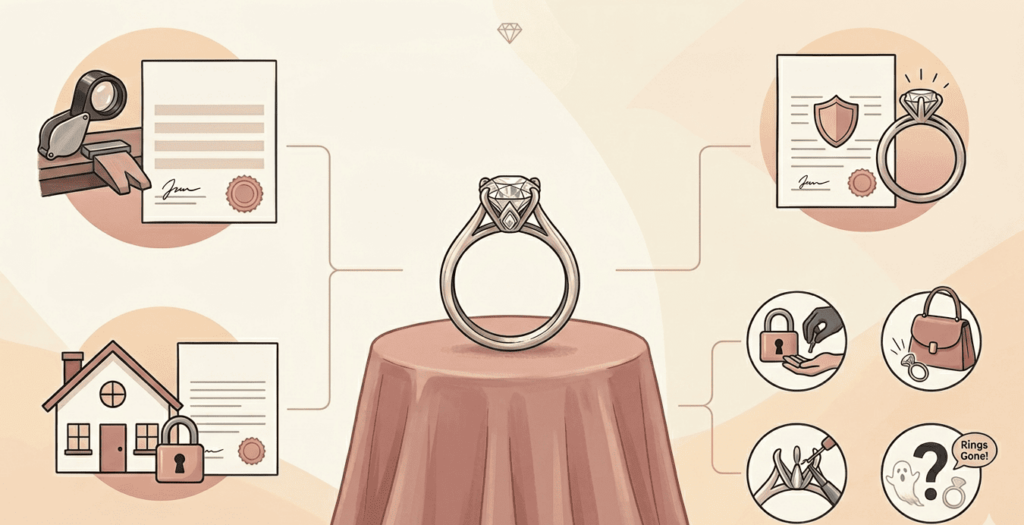
First, you need to understand what you actually have. That starts with a proper appraisal, then the right insurance option for the ring’s value, design, and how you wear it.
Key Takeaways
- Get a professional appraisal before insuring an engagement ring, especially if it’s custom-made.
- Home or tenant insurance may cover jewellery, but standard limits are often too low.
- A rider can work, while a standalone jewellery policy may offer broader protection.
- In Canada, many people can expect to pay about 1–2% of the ring’s appraised value per year. Loss, theft, damage, deductibles, and “mysterious disappearance” all matter.
When should you insure your engagement ring?
You should insure your engagement ring as soon as possible, ideally within the first few days after receiving it.
That doesn’t mean you need to panic or sort it out the same day as the proposal. But it is worth doing while the details are still fresh and before the ring becomes part of your everyday routine.
You’re still getting used to wearing something valuable every day. You may be travelling, celebrating, washing your hands constantly, or taking it off in places you normally wouldn’t.
If the ring has already been purchased, start the insurance process within the first few days if you can. A custom ring has more context than a receipt alone can show: stone details, setting style, metal, craftsmanship, and design notes. That context matters when the ring needs to be appraised, insured, repaired, or replaced.
What is a ring appraisal, and why does it have to come first?
An appraisal is a professional document that describes your ring and estimates its replacement value. It gives your insurer the details they need to understand what they’re covering.
A strong appraisal should include:
- Stone type and shape
- Carat weight, colour, clarity, and cut details
- Metal type
- Setting style
- Clear photos of the ring
- Replacement value in Canadian dollars
- The appraiser’s credentials
This matters even more for custom rings. The value is tied to the exact stone, design choices, labour, and way the ring was made. Our guide on how custom engagement rings are priced explains what shapes the original cost.
Who should appraise a custom engagement ring?
Use an independent, qualified appraiser who understands fine jewellery, diamonds, coloured stones, and custom work.
An appraisal shouldn’t be a vague one-page note that says “diamond ring, value $X.”
For custom rings, the appraiser should understand the chosen stone, side stones, setting style, gemstone type, and any design elements that would need to be recreated. We cover more of that in the one thing people get wrong when looking for a diamond. You can also read our bezel setting guide or morganite buyer’s guide.
For insurance, it’s worth looking at a provider that focuses specifically on jewellery, such as Jewellers Mutual. When a ring is custom, high-value, or difficult to replace exactly, a jewellery-focused policy can sometimes make the whole process feel a little more tailored.
What are your insurance options in Canada?
When people search for engagement ring insurance in Canada, they usually find two options.
First, you may be able to add the ring to your home, condo, or tenant insurance. This is often called a rider, floater, scheduled item, or personal valuables coverage. The ring is listed separately so it can be covered beyond the basic jewellery limit.
Second, you can choose a standalone jewellery insurance policy. This is separate from your home or tenant policy and designed specifically for jewellery.
Home insurance rider vs. standalone jewellery policy: which is better?
A rider may make sense if your ring is modest in value, your insurer offers strong scheduled jewellery coverage, the deductible is reasonable, and loss, theft, and damage are clearly covered.
On the other hand, a standalone jewellery policy starts to make more sense when the ring would be hard to replace properly. Maybe it’s custom, high-value, made around a specific stone, or something you wear while travelling.
The big thing to ask about is “mysterious disappearance.” That’s when the ring is simply gone and you can’t prove exactly what happened. Some policies cover that, but some don’t.
So, when you’re comparing jewelry insurance for engagement rings, don’t just compare the annual premium. Compare what happens if the worst day ever happens.
How much does it cost to insure an engagement ring in Canada?
Most estimates land around 1–2% of the ring’s appraised value per year, though this can vary by insurer, postal code, deductible, coverage type, and ring value.
A ring appraised at $5,000 might cost about $50–$100 per year to insure. A ring appraised at $10,000 might cost about $100–$200 per year. Keep in mind that these are general ranges, not exact quotes.
Not to mention, there’s one thing worth watching: don’t assume the highest appraisal value is always the most useful one. Some appraisals come in higher than the purchase price, and that may affect your premium. So you’ll want a realistic replacement value, not an inflated number that makes the ring more expensive to insure without giving you better protection.
What does jewellery insurance actually cover?
Coverage depends on the policy, so always read the wording. Still, ring insurance may cover theft, accidental loss, damage, stone loss, repairs, replacement, and sometimes travel-related loss.
What may not be covered? Normal wear and tear, poor maintenance, pre-existing damage, losses outside your policy terms, or unexplained situations if mysterious disappearance is excluded.
So make sure to keep the boring paperwork even after the fireworks. Seriously. The receipt, appraisal, certificate, photos, care notes — all of it becomes useful if you ever need to make a claim.
A studio warranty may help with manufacturing issues or repairs. Insurance protects you from bigger “life happened” situations.
What we tell our clients before they leave the studio
Get the ring appraised by someone qualified. Take clear photos from multiple angles. Keep all paperwork in one place. Then ask your insurer specific questions, not just “Is my ring covered?”
Ask:
- What’s the jewellery limit on my current policy?
- Is this ring scheduled separately?
- Is loss or mysterious disappearance covered?
- Is there a deductible?
- Can I choose the jeweller who replaces or repairs the ring?
- Is the ring covered while travelling?
- What documents do you need for a claim?
Thinking about a custom ring? Start with the details
The best answer to how you insure an engagement ring isn’t “call your home insurance company and hope for the best.”
It’s this: document the ring properly, get an independent appraisal, compare your coverage options, and ask better questions before choosing a policy.
Protecting it properly means making sure the insurance reflects the real ring, not just a rough estimate of what it might be worth.
When a ring is made in-house at Engage Studio, the documentation side is cleaner because the design, materials, stone details, and final piece are all part of one process.
Whether you’re just starting or already have ideas in mind, you can book a virtual or in-person consultation for our custom engagement rings and talk through the details with us before you buy.
Frequently Asked Questions
Does home insurance cover an engagement ring in Canada?
Sometimes, yes, but usually only up to a limit.
Do I need a receipt or appraisal to insure my ring?
Often, yes. An appraisal gives clearer documentation, especially for custom or higher-value rings.
What happens if I lose my engagement ring and didn’t have it insured separately?
You may only be covered up to your policy’s jewellery limit, and some types of loss may not be covered.
How soon after getting engaged should I insure my ring?
As soon as possible. Ideally, start within the first few days.
Is jewellery insurance worth it for a ring under $5,000?
It can be. If replacing it out of pocket would be stressful, insurance may still be worth it.